
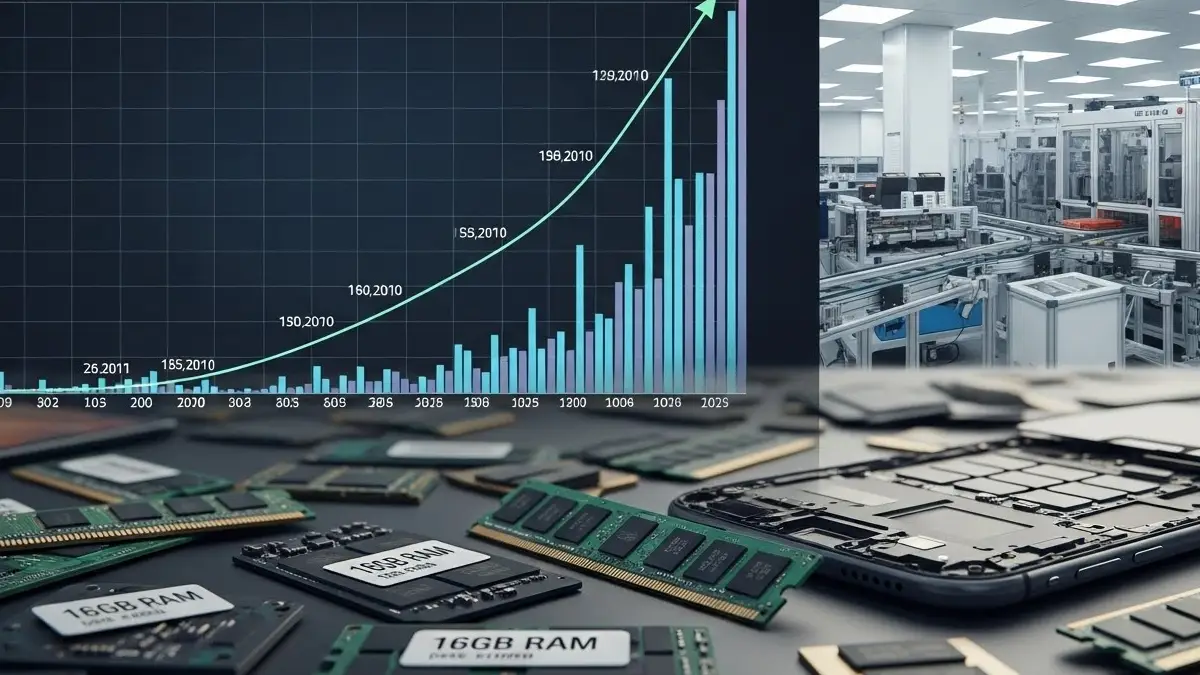

16GB RAM phones luxury is fast becoming more than just a catchy trend line for tech fans. A growing global shortage of DRAM and other memory chips is reshaping how smartphone makers plan and price devices, threatening the era when 16 gigabytes of RAM was a standard for high-end phones. The shift comes as major memory manufacturers divert production to high-demand sectors like AI and data centers, squeezing supply for consumer electronics and pushing prices up sharply.
Memory Shortage Hits Smartphones Hard
The chip shortage that started with a lack of components during the pandemic has evolved into a broader memory crisis. DRAM and flash memory inventories have dropped to some of the lowest levels in years, with only a few weeks of stock available at major suppliers. This leaves phone makers with tough choices: pay higher prices for memory, reduce RAM in new models, or delay launches.
According to industry reports, memory prices have spiked sharply, with some chips seeing price increases of up to 60 per cent compared to earlier in the year. Suppliers like Samsung, SK Hynix and Micron are prioritizing higher-margin products for AI and enterprise servers, leaving less for smartphones and laptops.
Here’s what this means for phone buyers and the broader market:
- Higher device costs
Increased memory costs are likely to raise the final price of many phones, especially higher-end models that use more RAM. Some brands are already warning of price rises if the shortage continues. - Reduced RAM specs
Mid-range and budget phones that once offered 12 or 16GB of RAM could ship with just 6 or 8GB to keep costs down. Entry-level models might even return to 4GB in some cases. - Delayed upgrades
The move to ever higher memory counts, like 24GB or more, could slow as manufacturers rethink whether customers will need that much RAM when prices are climbing.
The trend is already starting to show in market data. Analysts note that average smartphone shipments could dip in 2026 as companies manage higher component costs and buyers push back on steep price rises.
Why 16GB RAM is Under Threat
The root of this shift is not a sudden drop in demand for memory but a change in who is consuming it. Big tech companies building AI infrastructure are soaking up huge volumes of DRAM and high-performance memory, leaving less spare capacity for consumer devices. Memory makers have also increased prices to balance tight supply and strong demand, which passes costs on to phone makers and, ultimately, customers.
DRAM and LPDDR memory classes used in phones are particularly vulnerable because they share fabrication lines with server and AI-oriented memory types. With new chip factories taking years to build, industry watchers say shortages might last well into 2027 unless production ramps up faster than expected.
What Buyers Should Expect
If current trends continue, buyers in 2026 and beyond may notice:
- Fewer phones with 16GB of RAM as a default
- More models with lower base RAM and higher prices on top configurations
- A push by manufacturers to optimise software for lower RAM counts
For consumers focused on performance and future-proof devices, the message is simple: plan ahead. With memory costs rising, devices with large RAM counts may carry a premium not just for flagship brands but across the board.